This space is dedicated to the world of endurance sports. Although the focus is on Triathlon, the content has broad applicability, touching on subjects that are highly relevant to all endurance athletes from distance runners to rowers; pretty much all of the suffer sports. In addition to writing about this stuff, I compete too. If you are interested in learning more about me, browsing my writing that has been published on Xtri, or reading about some of my own athletic endeavors, just click on any of the tabs above.
Showing posts with label Physical Fitness (Training). Show all posts

Thursday, November 28, 2013

Iron Math: Calories and Why The Back Half of an IM Marathon Is So Damn Hard

I was recently trying to explain to someone that has little-to-no familiarity with endurance sports why the back half of an Ironman marathon is so hard.  In an attempt to put things in a more common and quantifiable language, I decided to frame my explanation in calories. I'd never thought through this on my own, and while the results certainly are not surprising, they illustrate why things tend to get so hard into the afternoon of an Ironman. Here is a summary of the conversation and the math.  Please note I'm not a scientist and a lot of this is based on assumptions, which in turn are based on various articles I've read; so while my analysis is far from precise, I am confident it is directionally correct.

Race Morning: Let's say I nail my carb-load and pre-race nutrition pretty well and start the race in a fully loaded state. I am going to call this having 2200 calories on board. I've seen a whole bunch of research that seems to center on a 'maxed out' carb load state between 2000-2800 calories, and given that I don't live in a lab, I think the lower end of the range most likely reflects my reality.

Swim: For the hour and change (and a bit of change in my case) it takes to swim 2.4 miles, I am going to assume I burn 700 calories. Thus, I'll finish the swim with 1500 calories on board which probably explains why I feel so good getting on the bike!

Bike: Based on an accurate power meter reading, I'm fairly certain I burn 700 calories an hour while riding. I am consuming 450 calories an hour of straight carbohydrate.  I am going to be generous and assume I'm actually absorbing 400 of those calories (research here says the upper limit of absorption per hour is 100 grams of CHO, or 400 calories, so this is a very aggressive estimate, but it's also a nice round number).  So, 700-400 = 300 calories net burn in every hour.  My IM bike took a bit under 5 hours, which means I had a net loss of 1500 calories (300x5) on the bike, so I'll finish the bike even.  Not ideal for starting a marathon (just think about starting an open marathon after eating a low-carb diet for 3 days), but not terrible either, which explains why most (myself included) feel pretty good in those first few miles of the run.

Run: Now this won't be as accurate as the power meter data from the bike, but running at between 7:50-8:30 pace (my range this last IM) and in fairly hot conditions, I'll estimate a burn of about 800 calories per hour. Between sips of sports-drink at aid stations and energy gels, I probably consume around 250-300 calories an hour on the run...so I'll call it 275, and this is all carbohydrate.  Let's say I absorb 250 of these calories (again, super generous, but keeping numbers round).  With this burn and replacement, I'm running a net deficit of 550 calories an hour.  Here is how that shakes out over the course of the run:
  • 1 hour (7.5 miles) 550 calorie hole
  • 2 hours (15 miles) 1100 calorie hole
  • 3 hours (21.5 miles in, I've slowed down a bit) 1650 calorie hole
  • 3-3.5 hours (to race finish) the hole grows to 2200 calories as it is becoming harder to take down anything, and the time it takes to absorb carbohydrate becomes greater than the remaining time left in the race.
Like I said in opening, this should not be surprising; the back half of an IM marathon is hard! But I do find this back-of-the-envelope analysis a nice and straight forward way to understand why most start to feel a big drop-off in overall energy around mile 13-15.

A few notes: This model assumes a lot, including that 100% of energy during the race is coming from carbohydrate stores.  I'm sure (because I've seen Alan Couzens' charts) that some of the burn is coming from fat, but probably a pretty minimal amount at the watts I'm riding (200-215) and pace I'm running (7:50-8:30).  Also, every individual is different in their metabolism and the strain that respective pacing places on their energy systems; so while this cannot be applied with any precision, from a thematic standpoint, this story holds true for any athlete that is "racing hard," whatever his or her hard might mean in watts, pace, etc.

What this means to me: I think Mirinda Carfrae said it best on the recent NBC Ironman special.  When asked what is going through her mind during the run, she simply said "Eat. Drink. Run."   The IM marathon is a beast with fangs, and all energy should be used on running, and if not running, making sure you eat and drink. Carfrae nailed it, and she is a total killer, and I have a mini-crush on her because of it (sorry Caitlin).

Final interesting thing: This type of approach to thinking about the IM marathon explains why when top-end professional's blow up, they often end up walking or DNFing, whereas for many age-groupers, at "blow-up point" the run turns into a jog which turns into a shuffle.  For the former, with body fat % that is extremely low, there isn't a lot of fat on board so literally the tank becomes empty and the car stops.  For age-groupers, even the pretty lean (e.g,. 7% body fat and up) there is enough usable body fat on board to fuel the end of the run, just at a significantly reduced pace.

Thursday, January 26, 2012

Pragmatic Tips on Indoor Training for Long-Course Athletes

As Featured on Xtri

Although the delay was nice, winter appears to be rolling through Ann Arbor, Michigan, and I'm sure the same is true just about everywhere else that is accustom to frigid temperatures and snow from January to March. Yes, cross-training by doing things like snowshoeing and cross-country skiing can be a great part of base training, but it remains just that; only a "part" of the routine, and for most serious athletes, a pretty small one. Let's face it. Even if an athlete has the most well-rounded annual training plan and benefits immensely from various cross-training activities, at the end of the day racing fast at long-course triathlon requires a lot of sport-specific work during all phases of training. And while so much of the December and January triathlon writing scene was swept up by articles and suggestions on outdoor fitness-building activities for triathletes, very little focused on how to get by indoors; particularly on the trainer, and for some living where conditions can get icy and downright miserable, the treadmill too.

Against that backdrop, many basements, garages, and even living rooms are probably in the process of being converted to training facilities. With that in mind, here are some suggestions to not only help you get through your indoor training, but also to get the most out of it, and hopefully make your indoor training somewhat enjoyable too...

Pick the right spot, and vet it with other important stakeholders: The last thing anyone wants to do is constantly lug their bike and trainer from room-to-room, or even worse, up-and-down stairs. Picking the right spot in the initial set-up is key!
  • Find a place that is cool with good ventilation, or, a room with decent window coverage
  • Get a box-fan; air going over your body will help keep you cool and as a consequence, keep your heart-rate down (of course you may not want to use it all the time, especially if you are purposefully targeting heat acclimatization trainng
  • Ensure good positioning of electrical outlets and stands for entertainment devices
  • Over-communicate the space and when and what it will be used for with others that you live with, as you don't want your training to be a frustration or feel like a burden to anyone else.
Take advantage of a controlled setting to dial in your workouts: No stop-lights, wind, change in temperature, or potholes; certainly part of the reason that two hours on the trainer/treadmill seems so long, but also, the reason that two hours on the trainer/treadmill can really help you take your fitness to the next level.
  • Make sure every workout has a purpose. Too many athletes just hop on the trainer, throw on a movie, and ride. Yes, time in the saddle is time in the saddle, but forced time in a controlled setting can be even more powerful if used to target specific adaptations. Between trainer resistance, gearing, and a front-wheel stand, you can train at virtually any cadence, heart-rate, or power level. In addition to the targeted physical benefits, including various sets in a workout absolutely makes it go by faster.
  • Personally, I try to avoid the treadmill at all costs, but if I am forced on it by too-icy roads, there is no better way to dial in a specific set of hill-repeats, and that type of sport-specific strength building is generally what base phase months are all about.
Have fun with food: This one should seem obvious, but there are still more than a few triathletes that refuse to depart from their sports-drink and gel routine. Yes, it's important to practice like you play, and during key workouts, I think it is a very good idea to experiment with and replicate race-day nutrition. That said, not every single long workout must mimic race-day nutrition, especially this early in the season and when you are already testing psychological motivators by doing the high duration ride on the trainer to begin with.
  • Yes, the cereal aisle is probably a top contributor to Type 2 Diabetes in America, but it is also a great place to get well-balanced carbohydrates and trust me, there is never a lack of variety. Just be sure to pick something that is easy to eat dry; e.g., pretty much anything that isn't a pebble or rice-crisp.
  • Experiment with bars. There are so many out there, so if you have always gone with one brand, try another.
  • Home-made pumpkin bread and muffins work too.
  • With the above in mind, I do want to be clear; devote at least a few workouts (maybe 2 a month) to tweaking and replicating your race-day nutrition plans. This is no doubt an important part of training the gut; it just doesn't have to dominate your entire winter.
Entertainment: I said earlier that it's probably not the best use of time to just throw on a movie and spin-aimlessly. That's not to say that music, television, and movies don't help make indoor training more enjoyable. If anything, your entertainment choice is probably the variable that contributes most to enjoyment and time-fly...or at least prevents time from moving in slow motion...
  • Match the entertainment to your workout's purpose and subsequent level of exertion. I find that movies or TV shows are great for recovery spins since I can devote nearly all of my mental focus to the unwinding story on the screen.
  • For mid-intensity rides, I love watching the news or political talk shows. A perfect choice since you can "zone out" from what you are watching with little consequence for when you choose to zone back in. And if nothing more, this opens up the potential for you to be a rock-star at (and have something other than triathlon to talk about) social gatherings. There is a direct correlation with my worldliness and time spent on the trainer, and I've got to admit, this debate season has been very entertaining...
  • For intervals or other more up-tempo workouts, I would recommend ditching the TV and going with music. You want your mental focus to be solely on the work at hand, and music will support this, not take away from it. Within this category, there are so many great free options to choose from, so long as you have a computer, some speakers, and an internet connection. Spotify lets you build and save playlists so you can be in full control. If you are looking for a bit more of a surprise, Pandora allows you to select an artist or song, and then will play endless music that is similar to your selection (great way to find new favorites).
  • For all streaming music, be sure to keep your computer within arms-reach from your bike. Every once in a while these websites prompt a response from you to continue playing the music. Nothing worse than having this happen midway through a 2x20 minute threshold set, with your computer 10 feet away...
Motivation: Simply hanging a poster, writing down a quote, or even date of a key race can be a great tool to mentally focus and help motivate you to get the work done. For example, I have one of my favorite quotes from triathlon Coach Paulo Sousa,"Chop Wood, Carry Water," written on a wood block, and nailed next to a picture of Mt. Everest on a wall directly in front of my bike set-up. You can create your own state-of-the-art (OK, so maybe a more honest representation is "serviceable") training center under almost any circumstance. For instance, I live with my girlfriend in a mid-size one bedroom apartment on a college campus. By following the recommendations above, I have come to thoroughly enjoy indoor training. And as the attached pictures show, it's not for glamour reasons either!

I'll end with probably the most simple yet power advice there is: more than anything, focus on your goal races, and know that the fitness you put in the bank now is earning interest over time, and come summer, you'll be happy to redeem it.

Sunday, January 15, 2012

Train as Much as Possible

As featured on Xtri.

I love a quote that I was made familiar with by ITU Long Course World Champion triathlete Jordan Rapp. In the context of being asked his opinion on a whole manner of training and recovery methods, he simply said that the best approach is to "train as much as possible." Breaking this statement down into its two component parts makes it even easier to understand:

1) Train as much: More volume and more intensity is good, so long as...
2) As Possible: The body and mind are in a position to successfully adapt to the applied training load

Smart, structured, and long-term training is all about introducing physiological stimulus to the body (e.g., your sport-specific and functional strength workouts) which triggers adaptation over time (e.g., getting faster, stronger) . Most athletes fully understand the first part of Jordan's statement -- introducing escalating levels of volume and intensity into their routines -- but not as many understand how it is enabled by the second part.

The body's ability to take on more training in a positive way (leading to fitness gains, not injury) is contingent on far more than an individual's current fitness level. This is not to say that current fitness levels don't matter, because they do; it would be irresponsible to prescribe a 4-hour ride for someone with a current max ride duration of 2-hours. The same goes for intensity. No doubt about it, the body must be aerobically and structurally ready to take on increased levels of training stress, and an incremental "building" approach is the only way to get there...But that's just one part of the equation and I find that many don't place enough importance on the other parts of the equation, if not overlook them altogether.

The "as possible" is a 24/7 type of thing, influenced literally by everything we do, both inside and outside of sport. To better illustrate my point, imagine two athletes with the exact same fitness level at the start of 2012. Now, I am going to differ a few critical "as possible" variables. Note that I am really going to extremes to juxtapose the two, and this is to make my point clear and obvious.

Sleep: Athlete 1 is a graduate student taking a very manageable course load, and is able to sleep 8-hours a night, and also has the time for naps on strenuous training days. Athlete 2 just got promoted at an investment bank, and thus, has had to stay up later and wake up earlier in order to manage increased responsibility at work. Athlete 2 sleeps 6 hours a night, and napping is not an option.

Nutrition: Athlete 1 has the time to think about and prepare most of his meals. He almost never misses a meal, and always fuels his workouts properly. Athlete 2, constantly cramming workouts in wherever they will fit, is often forced to eat sub-ideal foods, and unfortunately, even finds himself missing [the most important] meals after workouts due to the generally rushed nature of his life.

General Life Stress: Athlete 1 has a job lined up for when he finishes school, is in a supportive and loving relationship, and is also in a good financial position. Athlete 2 is working through some tough things with family, feels an internal pressure to beat the guy next to him at work, and consistently has superiors [at the bank] in his face about meeting deadlines.

Acute Recovery: Athlete 1 can wear compression tights to class, ice his body while taking care of reading assignments, and works with a great local massage therapist. Meanwhile, Athlete 2 would be hard pressed to wear compression tights on Wall Street, let alone even have the time to get the damn things on!! Icing is an option, but only on weekends, and massage therapy rarely fits into Athlete 2's schedule right now.

Long-Term Plan and Comfort: Athlete 1 works with a coach he trusts, and has a plan that he is confident in, and is constantly tweaked as a result of his response to it. Athlete 2 also works with a coach, as a matter of fact, the same coach as Athlete 1. That said, Athlete 2 just doesn't have the time or energy to communicate frequently, and even his virtual updates are short, and often lack qualitative feedback from workouts.

Imagine that each of these athletes has 15 hours available to train weekly. If they execute the exact same workouts, I would almost guarantee that Athlete 1 becomes fitter -- and races faster as a result -- than Athlete 2.

As a matter of fact, Athlete 1 might be able to take on even additional training (e.g., 18-20 hours a week). Athlete 1 can up the "train as much" part of the equation, because the "as possible" part enables it. Following the same logic, Athlete 2, on the other hand, would likely be wise to decrease his training load (e.g., maybe to something more like 10-12 hours a week). In short, a baseline fitness level (remember that in this example, Athlete 1 and Athlete 2 had the same ingoing fitness) is only one component in determining how much training an athlete can take on and positively respond to. Therefore, it is important to account for, and to the extent possible, manage the other components too. Although some of the "as possible" variables are out of our control, many of them are within it, and it's really just a matter of prioritizing what is important at certain times of life (e.g., do I take on the crazy job with the equally as crazy compensation, or do I max out my athletic potential??). It is also important to remember that so many of the "as possible" drivers are constantly changing; two-years from now, Athlete 1 (from our example above) may have 3x the "as possible" limiters as Athlete 2.

"Train as much as possible" really helps simplify things in an era where there is increasing complexity and variety on the market for training programs. So, what to do with all of this?

Constantly take stock of your "as possible" limiters and be sure that your training plan reflects them. At times, this may manifest in a window of opportunity to really up the training volume and intensity, while at other times, it might mean doing the opposite. Along those lines, realize that a decent amount of this is within at least somewhat of your control. To the extent that you find yourself in and/or can create a situation where the "as possible" widens, don't be scared to take advantage of it by getting aggressive in your training. That said, have the courage to do the reverse if required too.

And the best part about all of this: next time someone asks you about the secrets to your training program, you can simply respond, "I train as much as possible."

Tuesday, October 18, 2011

4 Pillars of Holistic Training: Nutrition

First off - sorry for the hiatus. When you (and I) look back to my last post, you may be upset (and I, somewhat embarrassed) that it has been 6 weeks. No need to waste more time with a long explanation, I've just been very busy with a number of things. Good news for everyone is that you can simply look back to the last 2 posts to refresh yourself of where we are at in our discussion of the 4 pillars of performance (1. sport-specific training, 2. functional strength, 3.nutrition, and 4.recovery). Today, we focus on nutrition. Much like with the prior posts, this should simply serve as a primer on a very complex topic, and I encourage you to take what you read below, and continue to educate yourself. Hopefully, if nothing more, the following helps you target your search for future information. OK, onto the good stuff.

Nutrition is of huge importance. You are what you eat, and you train and race what you are. The decisions that we make about what to eat and, as you'll read below, when to eat it, are pivotal to our immediate performance (e.g., hitting targets in a workout or race), long-term performance (e.g., getting to an ideal body weight and composition, recovering from and adapting to hard training), and overall general health (e.g., feeling good everyday, and setting ourselves up for long and high-quality lives). With so much going on here, I am going to make an initial cut to make this all a little bit easier to digest (no pun intended) by breaking this discussion of nutrition for athletes down into 2 parts:
1) Fueling: What we eat right before, during, and right after a workout
2) Nutrition: What we eat the rest of the day

1) Fueling
First I will introduce the concept of a "workout window," which is the period of time encompassing the 30 minutes before a workout, the total time of the workout, and the 30 minutes after a workout. The baseline understanding everyone needs is this: muscles run off of carbohydrates, and can store enough energy to get through between 70 and 90 minutes (depending on the individual) of training. So, if you have a longer workout, you have to refuel yourself as the training session goes on. If you are under that 90-70 minute mark, you may not need to fuel during your workout, but should still focus on the "right before" and "right after" portions of this post. Even if your workout is short and you don't need to take in calories, you should be drinking water for hydration during any workout, about 24-32oz/hour (if you want a more exact number, Google "sweat rates for athletes" and perform a sweat test.

- 30 minutes before a workout: 2 things are most important about this. The first is that whatever you eat, your gut needs to be able to tolerate it easily and digest it fast. No one wants to enter a workout feeling bloated, with a stomach ache, or nervous about having to poop. The second thing is this meal should be dominated by simple carbs. Like I said above, your body runs off of carbs, so proteins and fats in this time period are pointless. And, within carbs, the importance of simple carbs is huge. Complex carbs (e.g., brown rice, brown anything) take longer for the body to breakdown whereas simple carbs (e.g., most white things, sugars) are available for use by the body much quicker. In this instance, right before training, we want to top off our muscle stores (from the previous meal) with readily available carbs that we can use asap.

- During a workout: Same 2 things mentioned above (tolerable and simple carbs) apply, but with even more importance on both. To those ends, we have an array of sports drinks and sports solids (Gus, Powerbars, etc) -- giving us what we need in an easy way to digest -- to choose from. While there are many equations out there, a good general rule here is to aim for between 2 and 3 calories (again, dominated by simple carbohydrates) for every pound of lean adjusted body weight. So, for an athlete that ways 160 pounds and is 10% body fat: 160-16=144, 144*2/3 = between 288 and 432 calories per hour. Ideally, you want to aim for the upper end of this threshold, but meeting the first criteria; it has to be tolerable. Much like sport-specific training, this also takes practice (and a lot of experimentation to find out what works) but you have to train your gut to be able to digest while exercising. Since those caloric requirements can be kind of high, I almost always recommend using a mix of sports drinks and solids to hit the requirements. Since you generally want to chase solids with water, this requires having some sort of hydration plan that allows you to carry both sports-drinks and water. Lastly, you don't want to take down all your calories at once, but rather, break up your consumption over the course of an hour. Most athletes either eat/drink every 15 minutes or every 30 minutes, depending upon preference for size of intake (the latter obviously mandates a greater intake per time you eat/drink). Finally, waiting for that 70-90 minute mark to "start" this process is *not* what this means. If you know you will be training longer, then start your in-workout fueling immediately. So, for a simple example, in a 100 minute workout, I will start fueling 15 minutes in, and by the end of those 100 minutes, have probably consumed around 600 calories.

- 30 minutes after a workout: Your muscles are starving for fuel (even if you did everything above right, you can only replace about half of what you burn) and this is the time to give it to them. So many athletes don't eat after workouts, and it makes no sense. Refuel in this period with a mix of simple carbs (again, muscles are hungry, don't make them wait, keep it simple) and proteins. The ideal combo is 4 grams of carbs for 1 gram of protein. This is why Chocolate milk gets so much hype, as it is nature's (with some tweaking by man) perfectly formulated recovery drink (4:1 ratio, mostly simple carbs thanks to the added sugars). If you have the $$ to spend, the specialized recovery products may be even better, because they don't include anything that you can't use right away, and thus focus on maximizing the value of every calorie to fulfill what your body needs following a workout. 300-500 calories for this snack is ideal, followed by a proper meal a few hours later. I don't want to go into too much detail, but force yourself to take in this snack immediately after a workout. It is so important for realizing the gains from the workout and recovering so you can be ready for the next one. This completes the "fueling" portion. Onto general nutrition.

2) General Nutrition
If you train regularly, you will notice that the act of "fueling" really requires you to take in a lot of simple carbohydrates. Here is where things get interesting: Simple carbs are really only good for one thing, fast energy. Otherwise, they really are not good for you at all. So, with that simple principle in mind, throughout the rest of the day, an athlete wants to focus on proteins, "good fats" (e.g., unsaturated, olive oil, fatty fishes, etc) and complex (brown rice, sweet potatoes, whole grain stuff) carbs that take a long time to breakdown and thus provide the body with sustained energy to get one through the non-training parts of the day. The exception to this rule is fruits, which are often high in sugars, but their benefit in anti-oxidants and other critical nutrients by far outweighs the "sugar" hit.

I am not going to touch on this in much more detail, since I am in no position to make caloric recommendations and don't want to dish out general daily nutrition advice since this is very personal. What I will do is leave you with a simple overview for general nutrition:

Get your simple carbs and splurge on your sugary cereals, granola bars, pop-tarts; just make sure that you time this splurge correctly and in the fueling "workout window." Once this window closes, stay away from simple carbs (outside of fruits) and the focus should shift to the other macro-nutrients (proteins, good fats) and complex carbs for sustained energy.

So, when you evaluate your overall nutrition as an athlete, think in terms of fueling and general nutrition. Go over what you currently do, and determine the things that need to change. Be patient, and remember, much like training the rest of the body, the gut needs training too. Start slow, and experiment with fueling techniques to see what works best for you. In terms of general nutrition, it may seem hard to stay away from simple carbohydrates, but once you get in the habit of doing this, it actually becomes quite easy, even in our modern day fast-food era.

I also want to stress that this is a broad overview and there is just too much on this topic to cover in any one blog post. Feel free to contact me for further questions, etc.

Wednesday, September 14, 2011

4 Pillars of Holistic Training:Functional Strength

Last week we discussed sport-specific, or endurance training, and the many factors that go into swimming, biking, and/or running (see below if you missed it). This week, we turn to the second pillar of performance (endurance, functional strength, nutrition, recovery). By definition, functional strength is 1. Ensuring an athlete has the strength (and flexibility) to perform the movements his/her sport demands in the best and most efficient way possible, 2. Without becoming injured. While these two facets of functional strength almost always go together, I will examine them separately for the sake of structure in this post. And while what's left to say will be pretty short, do not be fooled. Functional strength may be one of the easiest things to comprehend and explain, yet it is one of the hardest things to actually make time for and do.

1. Strong/flexible enough to excel at sport(s): Push-off on the run, power on the pedal down-stroke, and pull on the swim. Stride length, lower-back reach in the aero-position, streamlined horizontal posture in the pool. These are just a few examples of things that make an enormous difference in your performance that cannot be achieved solely by sport-specific endurance training. As a matter of fact, sport-specific endurance training often works against these aspects of solid performance, as your body tends to default to "what is most normal/comfortable" and hard-wiring current muscle memory, even though it likely isn't optimal. Rather, a much more efficient and accurate way to target the muscles and joints needed for sport is through functional-strength training. Since this is not an area of my expertise, I will not recommend specific exercises, but will say, this generally does not mean power-lifting and heavy weights, but rather, very controlled and refined movements that often use one's own body weight for resistance. The best exercises bake in strength, flexibility, and balance. If you read on and commit to getting serious about functional strength training, purplepatch has some great resources, such as their functional strength for runner's program (click and scroll down).

2. Without becoming injured: Being able to complete high volume sport-specific training requires incredible structural (muscular-skeletal) support. Think of strength and flexibility as an enabler to your high-volume training; lay the foundation by building good functional strength, and your body will better tolerate and adapt to the endurance training. The most simple reason for this is that toward the end of long days, weeks, monthly cycles, when you are most prone to lose proper form, you won't. Losing proper form means muscle imbalance and compensation patterns, which are probably the largest culprit of injuries in our sport(s). There is research showing that even some bone injuries (e.g., stress fractures) result just as much from torque on the bone (e.g., tight muscles, ligaments pulling the bone at attachments points) as they do from sheer impact.

Earlier I said this is one of the hardest things to actually do...and I will just tell it like it is. Most endurance athletes always default to using that last 15 minutes to get in another few miles or lengths of the pool. Stop. The marginal benefit from using that time to stretch or perform functional strength exercises is literally 10x more than those last few miles. This *does not* mean start cutting your workouts short. It does mean designing a training program that includes and makes the time for this, and if that means shortening some of your workouts, then so be it.

I'll end my post with a great quote from a yoga teacher. "Strength without flexibility leads to rigidity, and flexibility without strength leads to instability." For endurance athletes, I will add one last part..."and having neither leads to total meltdown and injury."

For more detail on functional strength (and all the pillars of performance for that matter) check out the purplepatch knowledge+ page. For runners, check out the purplepatch running plans.

Like I said before, there are other options out there, but I have started working with purplepatch because I truly believe in the approach and philosophy, and have seen how well it works first-hand, and in some of the athletes that I work with.

Saturday, September 3, 2011

4 Pillars of Holistic Training: Sport-Specific Training

I’ll start by saying I am intentionally keeping these pillar-specific posts on the short side. They are simply meant to serve as a primer on each component of a holistic approach to training. If you want more detail, I highly recommend that you visit the purplepatch fitness knowledge page where there is an extensive amount of excellent material.

Sport-specific training, or endurance training, is obviously fundamental to an endurance athlete’s progress in the sport(s). I hate to say it, but anyone who says that you can become a better runner without running is wrong. So, while a large part of your training should be running (I use running as an example from here on out, but for triathletes, the same goes for swimming, biking, and running), the type and timing of your runs matter more than most think.

Type: Without being overly long winded, simply “running” is not enough. In order to improve as a runner, you need a good mix of endurance runs, pace-particular runs, long runs, hill-repeats, speed sessions, and recovery runs. The key here is that every run should have a purpose: from building strength and form (hill repeats) to building muscular endurance (long runs) to building speed (speed-sessions) to building feel and confidence (pace-particular runs). Making sizeable gains (especially for those already more advanced in their training) requires a shift in thinking from “going out for a run,” to “doing hard hill-repeats to build strength followed by two recovery run days to trigger physiological adaptations from the hill-repeats.” To enable this shift in thinking, it’s critical that the athlete has an understanding of what different runs accomplish, or is confident in a coach/program that does.

Timing: Once an athlete has mapped out all the different types of sport-specific workouts (e.g., the running examples listed above) the timing of when to complete these workouts becomes critical. Timing can and should be designed on a micro and macro level: For a triathlete doing a 2-a-day, should the bike or run come in the morning? What days of the week should my hardest workouts be on, and what days should my active recovery be on? At what point of my season should I be doing hill-repeats vs. speed sessions? Much like I mentioned above regarding the type of run, it takes both a thorough knowledge of sport-specific training, as well as a 30,000 foot view of an entire season to be able to time workouts properly. And one more additional note here; timing should not only consider the other sport-specific workouts, but also fit and align with all the pillars (functional strength, nutrition, recovery) of performance.

So, to summarize, with sport-specific training, the type and timing of workouts are very important, and always work together. Once an athlete understands that every training session has a purpose, the key becomes to balance those sessions and time them correctly to allow for the best physiological and psychological gains. Well this seems complicated enough for the running example I follow above, it becomes exponentially harder for multisport athletes, who must balance and integrate the 2-3 sports (love to Duathletes out there!) that comprise "sport-specific" training.

To that end, I think it takes one of two things to make all this work. 1) A lot of time and passion about the sport(s) to do the research and develop one’s own training plan...and also, a lot of discipline to stick to it and evaluate the results objectively, something I personally find impossible to do... or 2) A good coach or program, and a lot of trust and confidence in that good coach or program.

Personally, I take the later route (I have a pretty good knowledge of this stuff, but lack the ability to evaluate my own results objectively) and recommend it for almost everyone that is serious about improving as an endurance athlete. If you think this is some kind of “sales pitch,” re-read the above, remember that there are subsequent posts coming on functional strength, nutrition, and recovery, and then try to honestly tell me that you can integrate all of this on your own, and stick to (and also adjust at times) what you come up with. I would be hard pressed to find anyone that can do that.

So, with all of that in mind, I urge you to evaluate your current sport-specific training. If you are considering incorporating/using outside resources to enhance your training, for runners, check out the newly released purplepatch running plans , which I can personally vouge for. Furthermore, if you want more information on additional programs and coaching options, just reach out to me - I am familiar with many.

Next week’s post will focus on the second pillar: functional strength. In the mean-time, if you like what you are reading and want more in the form of very short blurbs, follow me on twitter.

Until next time, live hard, train hard!

Monday, August 29, 2011

Holistic View to Endurance Sports Training

The very nature of endurance sport(s) is one that demands a lot of effort spent in preparation. In the simplest of terms, racing at long distances requires training at long distances, and training at long distances takes consistent time and energy. Because almost all of us have a day job and numerous other commitments, there is a tendency to focus what is generally limited time and energy on improvement at our sport(s), by doing our sport(s): for this audience, running; or, swimming, biking, and running. This [I'll call sport-specific training from here on out] is extremely important. Generally speaking, particularly for those newer to the sport(s), if you want to run faster or further, you have got to run more! And for beginners, thinking of training for a 10K as running (or training for a shorter triathlon as swimming, biking and running) is probably OK, and a serviceable way to tackle your first event.

Here’s the catch…As an athlete becomes more advanced and serious [e.g., training harder/longer and racing more frequently] a much greater amount of stress is placed on the body, and often times, on the mind too. At this point, a one dimensional sport-specific approach to training not only no longer makes sense, but can actually be extremely dangerous, leading to overtraining, burn-out, and even worst, detriments to general health. Now it’s not like all of a sudden a one-dimensional athlete will get hit by a train, but more often than not, cues kick in that it might be time for a shift in paradigm: Stagnant performance, constant minor injuries, a stress fracture, frequent cold, trouble sleeping at night, lethargy during the day, etc, etc...More (in terms of sport-specific training) is better to a point, and even then, only if that “more” is done in the context of a much broader overall training environment.
Enter a more holistic
view of training that will drive performance and ensure good health. Matt Dixon, arguably the most visionary coach/mentor in endurance sports today (just look at the crazy
roster of pros under his guidance) has characterized [and made pragmatic] this holistic philosophy as taking a 4-pillar approach to training: 1. Sport-specific training, 2. Functional strength, 3. Nutrition and 4. Recovery. Much like a building, if one of these pillars is relatively (to the others) weak, the athlete will begin to crumble, and if a pillar is missing altogether, the athlete is likely to fall.

This approach by no means equates to more total hours spent on our sport(s). What it does mean is often a re-balancing of the current hours (e.g., a few less hours running, a few more working on strength and flexibility) and a much broader view of training (including what I eat, when I eat it, and how much I am sleeping). All too often athletes sabotage phenomenal sport-specific training by neglecting functional strength (this can manifest in the all-too-common achilles injury 2 weeks out from your marathon) ignoring nutrition (which involves fueling, or what you eat before, during, and right after exercise as well as general nutrition, which means what you eat during the rest of the day) or short-changing recovery (spending hundreds on the latest shoes, but not $50 on a monthly massage). Making this holistic approach work requires considering all 4 pillars in the greater context of your life. For example, if your current physical training load requires 8 hours of sleep per night for recovery, but your job and kids mean that the most you are ever going to get is 6.5, the answer might not be sleeping more, but it might be re-configuring the physical load. Hence, the 4-pillars can apply to everyone, but often times, in a very individualized way.

What are the implications of this? As a first step, when you design your training (or find a coach to help you do so), be aware of and consider how all 4-pillars fit in. Give each pillar equal weight so you don’t risk crumbling; this may mean learning more about nutrition and making hard behavior changes, cutting out an hour of running to attend a yoga class, and actually planning and building into training sound recovery from the physical work. And in an ideal world, make this equal importance tangible; if are the type that is crazy about tracking weekly mileage and pace, start tracking the calories you burn during a workout and your replacement of them in the glycogen window (more to come on these details in future posts). Keep a sleep diary for a week. Etc, etc.

While at first glance this may seem like a radical approach, once you learn more about the 4-pillars and how they fit together, it turns out that traditional one-dimensional program that only focus on sport-specific training is probably the most radical thing out there. A more holistic and comprehensive approach requires an enormous shift in orientation, and this isn’t just a challenge for age-groupers, but for many pros too.

If this makes at least some sense to you, please stay abreast of the blog over the next month. I will be profiling each individual pillar, and then writing a post showing how they all fit together. If you don’t have the patience and want to learn more now, visit purplepatch fitness and start exploring the wonderful resources Matt Dixon has put together. This week’s articles of the week are also themed around the purplepatch approach and 4 pillars.

As a disclaimer, I am starting to get more and more involved with purplepatch, simply because I really believe in what they are trying to do, and have seen it work in my own training (and no, I am not coached by Matt Dixon, but am lucky to be coached by someone who generally echoes his philosophy, and I’ve seen it work in huge ways). This also means that I will be continuously learning more about the 4 pillars, and to the extent that I can, sharing it with you! To that end, I just joined Twitter, and will use it solely as a vehicle to pass on this type of information, but in much shorter (pretty sure the limit is 140 words) and succinct blurbs (I may join Twitter, but I’ll never say tweet). If you are interested in daily tips and even an inside look at what some of the top pros are up to, follow me at: http://twitter.com/#!/Bstulberg

Until next time, Train Hard, Live Harder!!

Monday, July 18, 2011

Art and Science in Endurance Sports

Endurance sports are generally numbers driven. At the highest-level, performance at races is judged by the most honest broker of all -- time. To me, that’s a large part of the growing draw to endurance sports; in a world filled with so much subjectivity (just ask any management position at big company what it means for them to do a good job, and odds are, it won’t be a simple explanation), endurance athletics provide us with an increasingly rare ability to set a goal and measure it against an objective criteria. If the goal was a 3-hour marathon, there is no wondering if you did a good job or not. You either ran sub-3, or you didn’t. For better or worse, there just aren’t that many other areas in life where you can test yourself in such a pure way. So, against that backdrop, I would say racing with time as a gauge is a good thing.

Then there is training. Whether it is pace zones, distance, heart-rate, or wattage, workouts tend to be both driven by and measured by a proliferating amount of numbers on a screen. This provides an enormous benefit, using bio-feedback to ensure that our hard days are hard (not a problem for most endurance athletes) and that our easy days are easy (usually a much tougher challenge for endurance athletes). Numbers based training also lets us to measure progress and can highlight problems as they arise, allowing athletes [and their coaches] to make adjustments to training in real time. Personally, I train using pace and heart-rate, and if I could afford a power-meter, I would train using wattage too. I’m a big believer in making informed decisions in all things, and my training is no different. Data is great.

Next comes nutrition and recovery. Not that long ago, “calories in, calories out” was a fine guiding principle; now it is no longer good enough. Not only do we measure nutrients; carbs, proteins, and fats; but also sub-types of nutrients (energy gels are now branding themselves as having the right mix of glucose, fructose, and maltodextrin) and the timing of when we eat them (simple carbs right before and after workouts, good fats and proteins throughout the rest of the day). This type of nutritional information arose out of a lot of hard-science and an entire fleet of PhDs, and on balance, it’s pretty accurate, and it’s hard to argue that it can’t help improve performance and health. Same goes with recovery; new IPhone apps can tell you how many hours you spent in REM, and for under $70 at Costco, you can take home a scale that reads your weight, BMI, body-fat percentage, and hydration levels.

I could go on forever, but by now the point should be pretty clear. As endurance athletes (especially those of us that are more serious) we don’t just engage in a sport, but an entire lifestyle, and one that can gravitate toward being pretty numbers driven. Personally, I think all of this science is a good thing, but we cannot forget about the critical importance of art in the endurance athlete’s lifestyle. The rationale is pretty simple:

1. Population-based data (e.g., the ideal weight and body-comp for a male marathon runner) is based on a bell-curve. The smallest minority of people comprise the median/average, and the great majority (of us) fall somewhere along the tails. As a matter of fact, it is our individual scatteredness around the center that creates such a recommended number. To that end, becoming hell-bent on achieving such recommendations is a bad idea, since odds are, that recommendation isn’t fit for you as an individual. Use it as a guide or starting point, but know yourself, listen to your body, and figure out where along the curve you [as an individual] lie. Then zero-in on your “ideal point.” This is true for all population based science; it certainly defines a neighborhood you want to be in, but that’s it.

2. Individual data (e.g., heart-rate zones) is also somewhat based on averages. You may know your training zones like the back of your hand, but how does your last night’s sleep impact your heart-rate, or the argument you had with your boyfriend, or the stressful project at work, or the cup of coffee you had with lunch…Over time, these metrics (whether it’s heart-rate, pace, or power) paint a great picture of where we should be for each workout; but, on any given day, they can actually be detrimental to the success of a workout. Don’t get me wrong, it’s great that we have this personalized bio-feedback, but even it can be deceiving at times.

For these reasons, I suggest relying on art (or feel, touch, Zen…whatever you want to call it) to support and work in unison with science. Neglecting science can lead us down an extremely unstructured and dangerous path to poor training, racing, and health….but neglecting art can too.

I’ve noticed amongst peers in the sport(s) that a lot of people are becoming more and more comfortable with science, but a much rarer few is even aware of, let alone focused on the importance of art. And it’s not easy. When the Garmin says 7:10 or 149bpm, you know exactly where you’re at. But, what about when the body starts to feel lethargic all the time? Or you realize that little things throughout the rest of the day are bothering you more than they should? Being in touch with that side of the lifestyle, and then being able to make tweaks based on that feedback, can be a much greater challenge, but one that I believe separates good from great training and racing (and also good from great coaching, for those of you that work with or are considering a coach).

For further insight on this topic, check out the articles of the week. Most notably, the Slowtwitch interview with Matt Dixon, the Ryan Hall series, and conversation on the pros and cons of training with metrics.

Monday, April 11, 2011

Getting Through Big Blocks of Training

I am thrilled to have finished my 14-day “overload” period of training with a stretch of extremely strong workouts. Now, as my training phases down prior to a stretch of races in late April and May, my focus shifts from “get through monster weeks,” to “recover smart and stay sharp for key workouts.” While the latter is still ahead of me and requires a special kind of discipline and focus, I’m happy to be done with the former! To that end, while things are still fresh [in my mind, certainly not my legs], and with Spring "peak-time" here for so many athletes, I figured I would share a few thoughts on getting through big blocks of training. I lead by giving a brief rundown of my recent training [and the birth of these insights] and then offer some tips in two categories: physiological and mental. If you're short of time or attention, feel free to skip to the latter part of the post for top value!!

First, to set some context: My training program is built to peak three weeks prior to my first big race. The two weeks leading up to that point are “overload” weeks, in which both volume and intensity reach high points of the training cycle, and in this case, of my athletic life! To give you a brief sense of what that looks like, I’ll share my schedule from the last four days of the 14 day block:

Thursday Morning - 5x1 mile [running] repeats at max effort
Thursday Afternoon - 1:45 ride with 2x20 min at threshold
Friday - 35 min run, 1:30 transition ride [all at recovery exertion]
Saturday - 80 mile bike [with the last hour at threshold], 35 min transition run
Sunday - 1:30 bike ride [including power intervals], 1:30 transition run [last 40 min at tempo pace]

It’s all relative, but for me, this was pretty enormous, and while the [above] final stretch was the “biggest,” the 10 days preceding didn’t look all that different. As I mentioned in opening, I couldn’t be happier with how things went, as [I must admit, somewhat surprisingly] I posted some of the best numbers of my life in those last few workouts!

So now that you know where I’m coming form, a few thoughts on getting through big blocks of training: Physiological aspects first
Sleep
:
A majority of recovery happens during sleep. If you don’t sleep, you don’t recover, and you set yourself up for a pretty vicious cycle. Listen to your body, and don’t be embarrassed to check-out at 9:30PM if that is what it’s telling you to do. Of course, sometimes other obligations cannot be moved, but if you’re fighting to keep your eyes open so you can watch Jersey Shore, or even Anderson Cooper, hit the sack instead.
Nutrition: Always important, but especially when pushing limits. To make it simple, you are going to need to eat a lot of high quality foods to support the work! That said, you may not have the energy to cook a lot of high quality foods. My advice here is cook in bulk and store. I started off my week by making 14 cups of brown rice, and about the same in pasta…you get the point. Stock up on Powerbars, Gus, etc [at RunningFit of course] so you won't have to worry about running out and needing to do additional errands during the week. Also worth mentioning, “peak time” generally means “race-weight time.” If you need to drop a pound over two weeks, that will probably happen naturally given the increasing volume and intensity of training. But, if you are trying to make up for lost ground by cutting significant weight, now is not the time. If you skimp nutritionally during these periods, you set yourself up for low quality workouts, and worse, injury. Most people are much faster at 155lbs than at 150lbs with acute injuries and chronic fatigue.
Keep the parts up: While sleeping enough and eating right does wonders for the “whole,” it’s pretty inevitable that the “parts” may need some extra attention. I know it’s a huge pain, but ice the sore spots regularly. Bags of frozen peas are cheap, work great and last for months. Prioritize stretching. Trust me, the last thing I want to do after a 5 hour workout is spend 15 minutes stretching, but think of it like this: at that point, the marginal value from 15 minutes stretching is probably greater than any of the prior 300 minutes! Remember how nervous you get when sore spots arise during a workout [e.g., your IT tightens up around your knee], and then think twice about skipping stretching. Get a massage. I’m a huge believer in the power of massage to expedite recovery and prevent injury.

Just as important, the Mental aspects
Think workouts, not days, and definitely not weeks: Plan your schedule [for logistical matters] around the week, but after you do that, try to forget about everything but the training session in front of you. This type of thinking is hard to engender, but the approach a) makes the challenge of an overload period much more manageable and b) allows you to be fully present and focused on the current workout.
Remember, training and its effects are cumulative: Not every workout is going to be your best. As a matter of fact, it is likely that you may have some pretty crappy ones. Who wouldn’t after training so hard for a consecutive stretch? A whole manner of research shows that fitness gains take anywhere from 10-21 days to set in. “Get through,” the monster training blocks, and then let everything sync-in as your body adapts during your phase-down/taper/etc. Your performance at priority races [when you are well-rested] is the best standard by which to judge your training. Do not try and judge each and every workout [for more on this, see my prior post “The Unimportance of Speed.”] This isn’t to say just go through the motions! Give training sessions the effort they require, but don’t stress over the pace on your watch.
Keep the goal(s) in mind: Insert little reminders of big races into your training routine. This helps maintain motivation, and also balances a “thinking workout” mindset with one that remembers that “training is cumulative.” Each individual workout has a purpose, which in aggregate, compounds over time to set you up for success on race days.
Celebrate little victories: Create some “checkpoints” [for instance, after a tough stretch of workouts, or maybe at the end of a week] during overload periods, and use them to not only evaluate your progress, but just as important, to celebrate the work you have done. Crack your favorite bottle of wine. See what those Lobsterfest commercials are all about. Get the strawberry cheesecake pancakes at Ihop! Don’t go overboard, but do unbutton a bit. All of a sudden, if you move from workout-to-workout, and then checkpoint-to-checkpoint, the monster training block actually goes by kind of fast.

I hope you enjoyed reading, and maybe even picked up a thing or two to implement in your own training. While there is no single equation for how to get through big blocks of training, there seem to be a few overarching principles that center on supporting the training physically and mentally. Figure out what works for you, and do your best to stick with it. As for me, I’m planning on ending this recovery week with a small Duathlon race in Ohio. It will be a great chance to work through transitions and identify any kinks that need to be worked out. Look for a race-report update early next week!

Stay tuned, and until next time, Train Hard, Live Hard!

Wednesday, March 2, 2011

The Unimportance of Speed

It’s great to be training down in Clermont Florida, where it has been 75 and sunny every day. A huge impetus for taking this trip [amongst many other things] was to create an opportunity to ride my new time-trial bike outdoors before Duathlon Nationals and the May races [in Michigan] that I have on my calendar. For those of you who may be unfamiliar, to make a long story short, a “time-trial” bike has a much more aggressive geometry/fit than a road bike, and as a result, it handles much differently [e.g., one has a lot less control on a TT bike vs. a road bike, but also the potential to go much faster].

My first hard training session of the trip involved a 1:20 bike ride that included speed sets, or 2x10 minutes of best-sustainable-effort [2 episodes of near all-out riding with 3 minutes rest in between], followed by a 30 minute transition run; the first mile at a tempo effort, everything else relaxed thereafter. I averaged around 24mph for the bike speed sets, and then ran a 5:55 first mile off the bike. For me this is incredibly fast -- by far the fastest I have ever been. I wasn’t sure if it was the new bike, the improved legs [payoff from seemingly endless winter hours on the trainer] or some combination of the two. In any event, I was stoked, and excited to report the results to my coach. His response went something like this: “Don’t matter Brad, I just want to know where your heart-rate was at.”

After giving him my heart-rate data [which was also quite good, as my legs were able to sustain an extremely high heart-rate during the intense parts of the workout], I pushed a bit harder on his whole “non-reaction” to the enormous speed gains from any workout that I did last year. I got nothing from my coach but a reminder that I did the workout on flat terrain [plus for speed], in wind conditions that will never be exactly the same again [who-knows for speed], and only two days after running a 10K at race-effort [minus for speed].

Taken together, speed tells us very little to nothing, and is an awful proxy for judging workouts. Too many factors outside of one’s effort and current fitness impact and determine speed. It’s actually an extremely long list, but the best and most clear examples of some confounding variables are:

1) Wind condition
2) Course profile/grade and
3) What you did in the days leading up to the workout [e.g., are you well-rested].

To really drive the point home: it’s much better to go 23mph on a windy day over rolling terrain after doing a hard workout two days prior than it is to go 26mph with the wind at your back on a flat course after a week of easy training. Although the speed feedback implies that the second workout was much better, odds are, our hypothetical athlete was probably pushing his/her body harder in the first example. And if training sessions are judged by the physiological and mental adaptations that they foster, than the first workout was superior and the one to be celebrated.

This is true of biking and running, and I’m sure in many other sports too. This is also why almost all coaches and training programs use heart-rate, power, perceived exertion, or pace bands [forgiving pace ranges] to guide workouts, and why how you feel after a workout [are you sore and beat after a hard effort...or refreshed after a recovery workout] is more important than the speed on your Garmin. This is also extremely counter-intuitive, and a hard chasm for data-driven, improvement oriented, speed junkies to cross. But, once crossed, you’ll be more likely to choose more challenging terrain for your workouts and get more out of them, and you'll be less likely to stress over a number that really is rather arbitrary and I’d say anywhere from 20-30% out of your control depending on the day (unless you can control the wind and things like that).

Small caveat here, there are some times when speed is extremely important. For instance, if you are trying to qualify for the Boston Marathon or some other race that uses speed as a standard [pick a flat course, hope for no wind, and taper properly], or, if you are doing indoor training on the same course under the same rest conditions [e.g., weekly 400 repeats inside after two easy days] then speed matters and can be useful as training data. But more generally, the best way to monitor performance during training and racing is based on indicators of exertion [and for competitive athletes, did you go faster than the guy/gal in front of you in races]. This doesn't mean one needs to invest in all kinds of heart-rate and power technology [though it helps]. The best way to judge an effort is how your legs feel during it and the morning after. It takes some getting used to, but I guarantee that over time, you’ll be shocked at what outstanding data you gather simply from how your body responds to training.

Until next time, train hard and live hard!

Thursday, January 13, 2011

Body as a Machine?

Since my last post, I've had a particular workout worth sharing. The workout itself wasn't anything special: just a 1:40 Z1 [endurance zone] trainer ride. Granted it did come in the afternoon following a power-lifting session earlier that morning, all in the spirit of building leg toughness and acclimating my body to being efficient on already heavily worked legs [since that is what Duathlon is all about]. So these Thursday rides are comparatively tougher than other Z1 rides given I'm starting on already worked legs, but they still normally are not that hard to get through. This particular ride, though, turned pretty ugly about 1 hour and 10 minutes in, when my legs turned to bricks. Ironically, my health care economics class focused on deadweight loss earlier that afternoon, and now, all I could think about was the deadweight loss that had become of my legs. I got through the ride, but it was pretty shitty, and my power output totally crapped out for those last 30 minutes.

Why did this happen? I can't be certain, but I have a sensible guess. My pre-ride meal was leftover trout from a great dinner the night before [I didn't want it to spoil, but fish is not a simple carbohydrate] and I ran out of energy gels, so my caloric intake while on the bike was about half of what it usually is. Before getting on the bike, I'm thinking it's only a 1:40 ride, so no big deal, right? An hour and 10 minutes later, I learned that I couldn't have been more wrong.


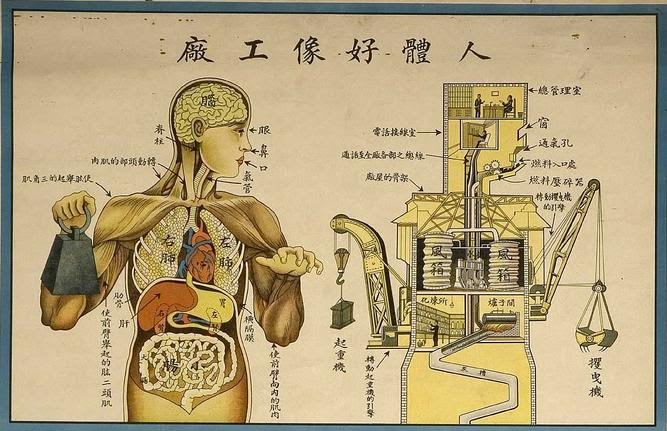
Now aside from those miserable 30 minutes, this was a really cool moment for me in that it let me get philosophical. Basically, Descartes got it right when it comes to athletic endurance training. Once an individual achieves a certain level of training, the body absolutely becomes a machine. Put the wrong type of fuel in a machine [e.g., protein instead of carbs] before revving it up, and the machine isn't going to work as it should.


But is that really all endurance sports is about? At first this kind of troubled me, but after a bit of thinking [on, at this point, jello legs] I arrived at a different conclusion. Yes, smart training does hinge on a highly calculated mechanical-like approach. But on race day, it's the soul of an athlete that matters most, and the soul's integral connection with the body. In addition to races, even during a few critical workouts each year, the machine approach can go to hell. During these particular workouts (heard them called "seeing god," or "going to the well" and races, peak performance comes down to an individual's belief in him/herself, ability to suffer, and their psychological fortitude to rise above what they thought were [mainly physiological] limits. I still wouldn't recommend trout right before a key-race of over an hour, but even the most perfectly formulated carbohydrate only gets you so far so fast.

To summarize my thoughts: much of effective training is about zoning out, giving the machine what it needs, and letting it run. But racing [and those few workouts that we all hate to love] encompasses far more than that, and actually has much more to do with soul and mind-body connection. Descartes's machine-like approach is a necessary pre-requisite for peak performance, but it only gets you so far. At a certain point, it's the human elements that make or break your day. How will you react when you are stripped down to your core? That's when the true growth occurs, and I think why so many people love endurance sports.


As for my training more generally, things are progressing nicely, and without much excitement. Base building is definitely in the Descartes zone; fuel the machine, run the machine in a calculated way [heart-rate] and rest the machine. More training details to be posted at the end of this current cycle in about two weeks.